

AI SaaS Trends are changing how businesses in the USA build products, serve customers, automate work, and compete online. Software companies are moving beyond simple AI chatbots. Modern SaaS platforms can generate content, analyze data, automate workflows, assist employees, and complete multi-step tasks.
Businesses are also looking for software that produces measurable value instead of adding another complicated tool to their technology stack. AI agents are becoming especially important. Microsoft reported in its 2025 Work Trend Index that 81% of leaders expected agents to be moderately or extensively integrated into their company’s AI strategy within 12–18 months.
The 2026 market is focused on practical AI. Companies want faster operations, better customer experiences, lower repetitive workloads, stronger security, and software that can work with existing business systems.
For a small business owner, startup founder, marketer, developer, or enterprise leader, understanding these trends can help identify where SaaS technology is heading Future of AI Tools 2026.
What Are AI SaaS Trends in 2026?
AI SaaS trends are major changes in software-as-a-service products caused by the increasing use of artificial intelligence.
Traditional SaaS usually provides online software through a subscription. AI SaaS adds machine learning, generative AI, automation, predictive analytics, AI agents, natural-language interfaces, and other intelligent features.
Examples include:
- AI writing platforms
- AI customer support software
- AI sales assistants
- AI coding platforms
- AI marketing automation
- AI cybersecurity software
- AI financial analysis tools
- AI project management platforms
- AI healthcare administration software
- AI-powered CRM systems
The biggest change is that AI SaaS is moving from helping users complete tasks toward completing parts of the workflow itself.
Microsoft’s 2026 Work Trend Index describes a workplace where AI and agents increasingly take on execution while humans retain responsibility for directing work and outcomes.
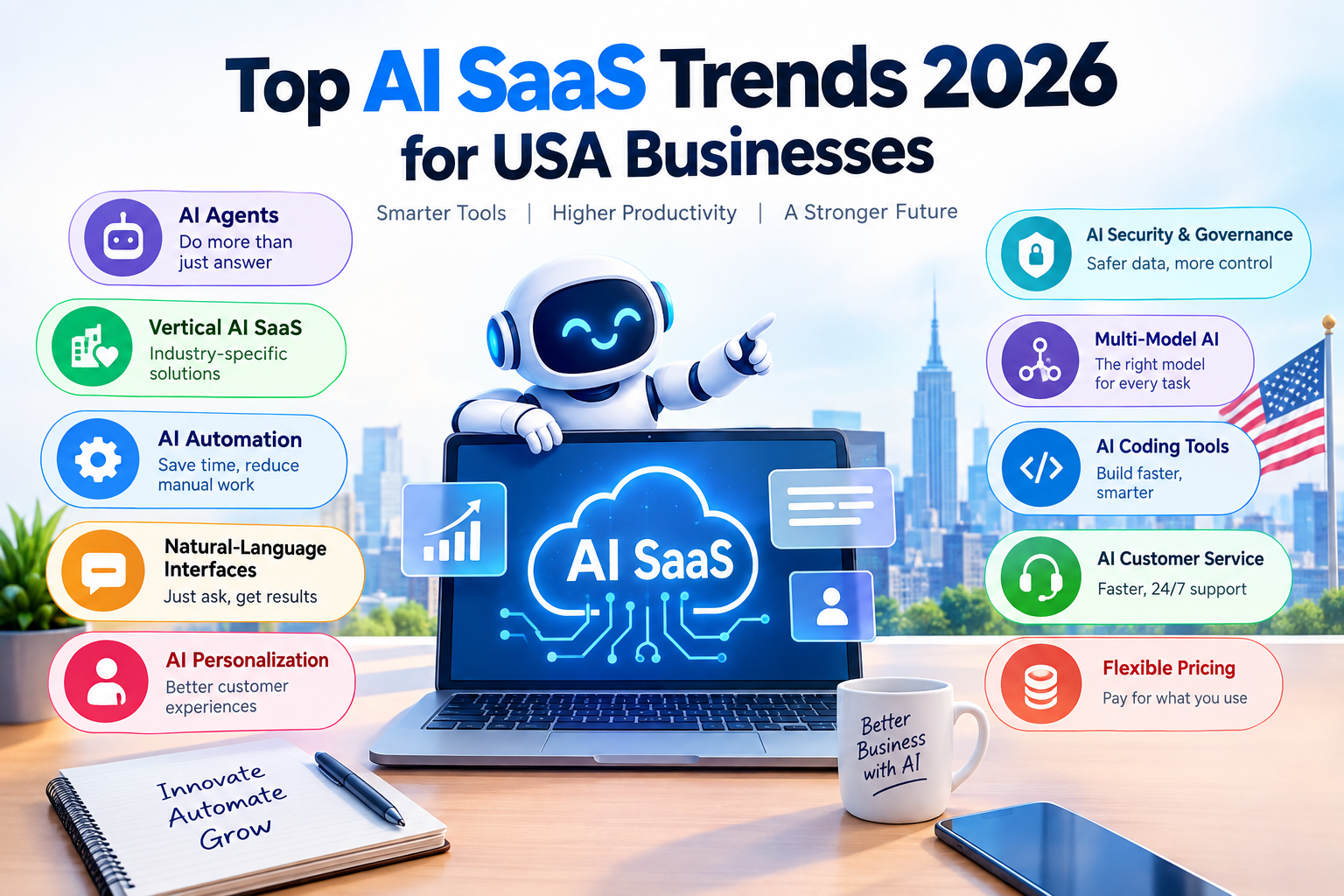
Top AI SaaS Trends 2026 for USA Businesses
1. AI Agents Become a Core SaaS Feature
AI agents are one of the most important AI SaaS trends in 2026.
An AI agent can understand an objective, use connected tools, perform multiple steps, and return a result. This is different from a basic chatbot that mainly answers questions.
A SaaS platform could use an agent to:
- Research potential customers
- Prepare sales reports
- Schedule meetings
- Analyze business data
- Create marketing campaigns
- Handle customer-service requests
- Update CRM records
- Monitor repetitive workflows
Microsoft’s research describes a progression from AI assistants to digital colleagues and eventually systems capable of running complete business workflows with human oversight.
Real-world example: A U.S. marketing agency could use an AI agent to collect campaign data, identify performance changes, prepare a report, and create a list of recommended actions for a human marketer to review.
2. Vertical AI SaaS Growth
Generic software is no longer the only direction for SaaS companies.
Vertical AI SaaS focuses on specific industries such as:
- Real estate
- Healthcare
- Legal services
- Accounting
- Construction
- Insurance
- Education
- E-commerce
Instead of offering a general-purpose AI assistant, vertical SaaS can be trained and designed around industry-specific workflows.
Real-world example: A legal SaaS platform could help organize case documents, summarize contracts, search information, and create first drafts while leaving final legal decisions to qualified professionals.
This approach can make software more relevant because the product understands the user’s industry, terminology, workflows, and common problems.
3. AI-Powered Automation
Automation remains a major part of AI SaaS trends in 2026.
Businesses want software that connects multiple applications and reduces repetitive manual work.
AI automation can connect:
Customer inquiry → AI classification → CRM update → Email response → Human review
Marketing teams can automate content workflows. Sales teams can automate lead qualification. Finance teams can automate document processing. Customer-service teams can automate routine questions.
The value comes from connecting AI to the actual workflow rather than using AI as an isolated feature.
4. Natural-Language Software Interfaces
Another important AI SaaS trend is the move toward natural-language interfaces.
Users increasingly expect to tell software what they want instead of learning complicated menus.
For example:
“Show me our highest-value customers from the last 90 days and create a sales report.”
The SaaS platform can interpret the request and retrieve the relevant information.
This could make complex business software easier for non-technical employees.
5. AI Personalization
Personalized software experiences are becoming more sophisticated.
AI can analyze customer behavior and use that information to personalize:
- Product recommendations
- Email campaigns
- Website experiences
- Customer support
- Pricing experiences
- Sales messages
- Content suggestions
A U.S. e-commerce company, for example, could use AI SaaS to recommend products based on browsing behavior, previous purchases, and customer preferences.
6. AI SaaS Security and Governance
More AI creates more responsibility around security.
AI systems may have access to customer information, company documents, databases, and business applications. Agentic systems can also act on behalf of users Most Powerful AI Tools Today
That makes permissions, identity management, monitoring, and human oversight increasingly important.
Current reporting on agentic AI security highlights concerns around excessive permissions and machine identities.
AI SaaS companies are therefore adding features such as:
- Access controls
- Audit logs
- Data encryption
- Human approval
- Activity monitoring
- Role-based permissions
- AI governance tools
- Data privacy controls
7. Multi-Model AI SaaS
Many SaaS companies are moving toward systems that can work with different AI models.
Instead of depending entirely on one model, a platform may select different models for different tasks.
For example:
- One model for writing
- One for coding
- One for image generation
- One for reasoning
- One for document analysis
This can give businesses greater flexibility and potentially improve cost management.
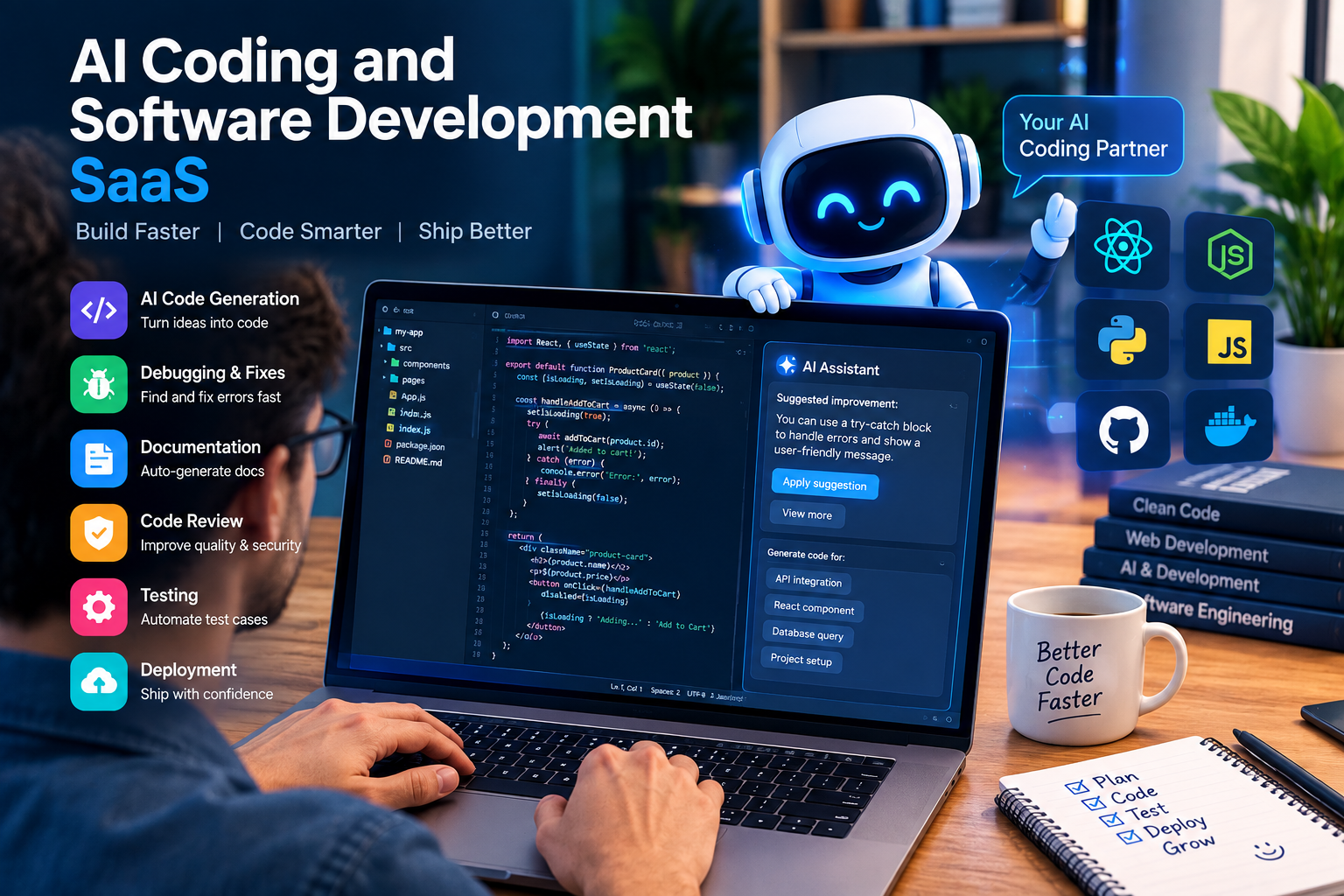
8. AI Coding and Software Development SaaS
AI coding tools are becoming a major SaaS category.
Developers can use AI for:
- Code generation
- Debugging
- Documentation
- Testing
- Code review
- Refactoring
- Application prototyping
The trend is moving from simple autocomplete toward AI systems that can handle larger development tasks.
This creates opportunities for startups building AI developer platforms and coding SaaS products.
9. AI Customer Service SaaS
Customer support is another major area for AI SaaS.
AI customer-service software can answer common questions, summarize conversations, classify tickets, search knowledge bases, and route complicated issues to human agents.
The goal is not necessarily to eliminate human support. A practical approach is to let AI handle repetitive requests while human representatives focus on complicated customer problems.
10. Outcome-Based and Usage-Based Pricing
AI SaaS pricing is also changing.
Traditional SaaS often charges a fixed amount per user each month. AI products can have unpredictable computing costs, especially when customers use powerful models frequently.
As a result, SaaS companies may combine:
- Per-user pricing
- Usage-based pricing
- Credit systems
- Tiered plans
- API consumption
- Premium AI features
Customers will increasingly compare the cost of software with the actual business value it creates.
AI SaaS Trends 2026: Features Comparison Table
| AI SaaS Trend | Main Use | Business Benefit | Example |
|---|---|---|---|
| AI Agents | Task execution | Less manual work | Sales agent |
| Vertical AI | Industry workflows | Better specialization | Legal SaaS |
| AI Automation | Workflow automation | Saves time | CRM automation |
| Natural Language | Software control | Easier usage | AI analytics |
| Personalization | Customer targeting | Better experiences | E-commerce |
| AI Security | Protection | Lower risk | AI access controls |
| Multi-Model AI | Model selection | Flexibility | AI platform |
| AI Coding | Development | Faster coding | Developer SaaS |
| AI Support | Customer service | Faster responses | Support agent |
| Usage Pricing | AI consumption | Flexible costs | API SaaS |
Pros and Cons of AI SaaS Trends
Pros
- Reduces repetitive work
- Can improve employee productivity
- Provides faster data analysis
- Supports personalized customer experiences
- Makes advanced technology easier to access
- Can help startups operate with smaller teams
- Enables automation across multiple business functions
- Creates new SaaS product opportunities
AI can also allow smaller businesses to access capabilities that previously required larger teams.
Cons
- AI software can produce incorrect results
- Subscription costs can increase as usage grows
- Sensitive business data requires protection
- AI agents need appropriate permissions
- Employees may need new skills
- Integration can be difficult
- Some workflows still require human review
- AI governance can become complicated
Microsoft’s research emphasizes that organizations need appropriate foundations, including workflow mapping, unified data, and governance, before scaling AI agents.
AI SaaS Performance in 2026
Performance depends on the type of software, AI model, business workflow, data quality, and implementation.
| Trend | Productivity Potential | Automation Level | Human Oversight |
|---|---|---|---|
| AI Agents | High | Very High | High |
| AI Automation | High | Very High | Medium |
| Vertical AI SaaS | High | High | High |
| AI Customer Service | High | High | Medium |
| AI Coding | High | High | High |
| Personalization | Medium-High | Medium | Medium |
| Natural-Language SaaS | Medium-High | Medium | Medium |
| AI Security | High | Medium | High |
These are practical categories rather than universal performance scores. Results vary between businesses.
AI SaaS Pricing Trends 2026
AI SaaS pricing is becoming more flexible because AI usage can vary significantly between customers.
| Pricing Model | How It Works | Best For |
|---|---|---|
| Free Plan | Limited features | Individuals |
| Per User | Monthly fee per user | Teams |
| Tiered | Different feature levels | Growing businesses |
| Usage-Based | Pay for consumption | API-heavy products |
| Credit-Based | Buy AI credits | Generative AI |
| Enterprise | Custom contract | Large companies |
Businesses should calculate the total cost of ownership instead of looking only at the monthly subscription.
Important costs can include:
- User licenses
- AI usage
- API consumption
- Integrations
- Data storage
- Implementation
- Training
- Security
- Enterprise support
How U.S. Businesses Can Use AI SaaS Trends
A small U.S. company does not need to adopt every AI technology at once.
A practical starting point is to identify one repetitive business process.
Examples:
Marketing: Generate content briefs and campaign ideas.
Sales: Qualify leads and summarize customer interactions.
Customer service: Answer routine questions.
Finance: Extract information from invoices.
Operations: Automate repetitive workflows.
Human resources: Organize documents and assist with internal questions.
The best implementation depends on the company’s data, workflow, security requirements, and goals.
AI SaaS Trends and the Future of Work
AI SaaS is changing the relationship between employees and software.
Instead of employees performing every step manually, humans can increasingly define goals while AI handles parts of the execution.
Microsoft’s 2026 Work Trend Index studied 20,000 workers using AI across 10 countries and describes this shift as AI and agents taking on more execution while people retain greater agency over decisions and outcomes.
This creates a new skill requirement. Employees may need to learn how to:
- Give clear instructions
- Review AI outputs
- Manage AI agents
- Protect company data
- Understand AI limitations
- Design efficient workflows
The future SaaS employee may spend less time clicking through repetitive software screens and more time directing intelligent systems.
FAQs About AI SaaS Trends 2026
1. What are the biggest AI SaaS trends in 2026?
Major trends include AI agents, vertical AI SaaS, workflow automation, natural-language interfaces, personalization, AI security, multi-model systems, AI coding tools, and usage-based pricing Best AI Tools for Passive Income.
2. Are AI agents replacing traditional SaaS?
AI agents are changing how SaaS products work, but traditional SaaS remains important. Many platforms are adding agent capabilities to existing software rather than completely replacing traditional interfaces.
3. Is AI SaaS useful for small businesses?
Yes. Small businesses can use AI SaaS for marketing, customer support, sales, content, data analysis, administration, and workflow automation.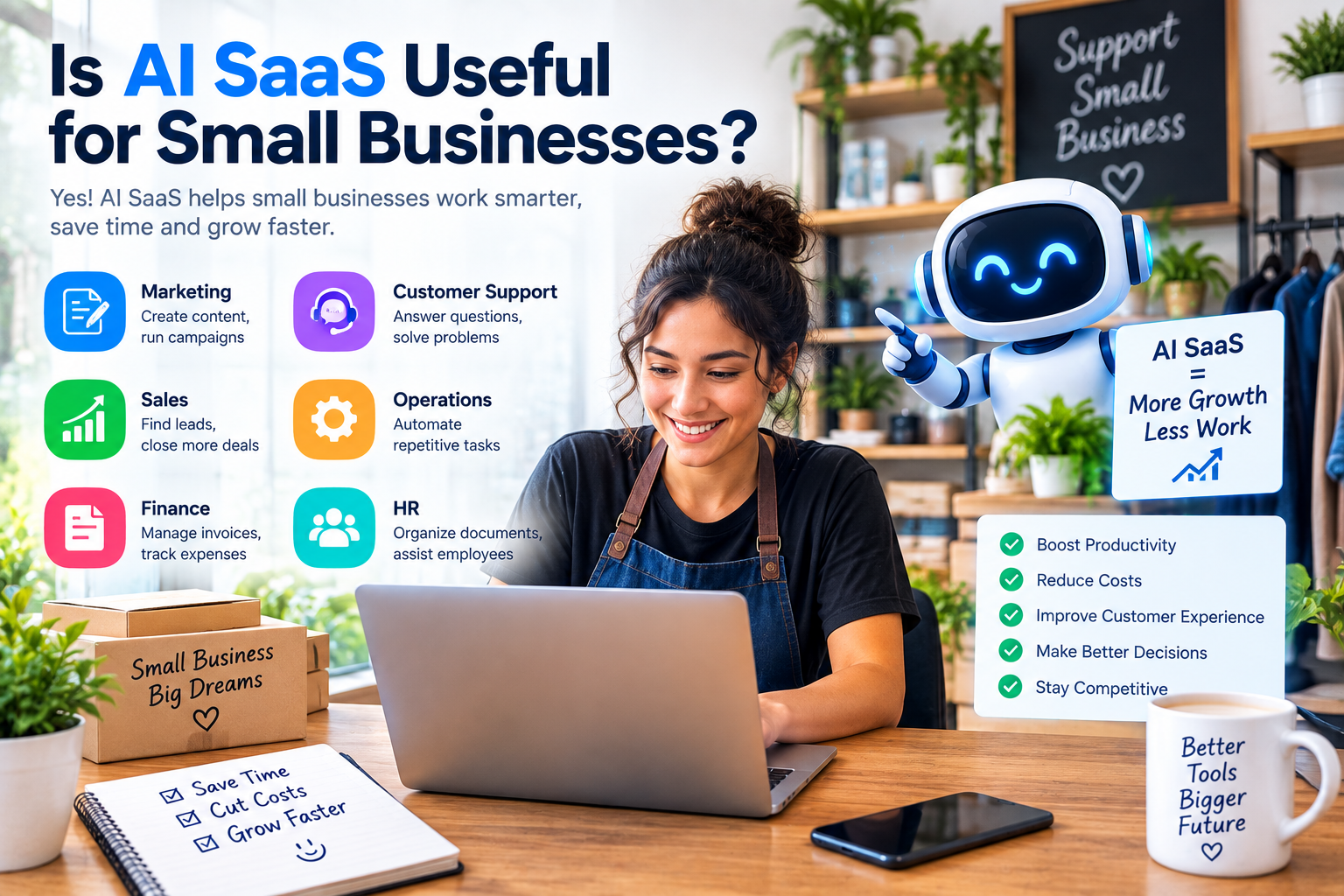
4. What industries are using AI SaaS?
AI SaaS is being developed for industries including healthcare, legal services, finance, real estate, retail, marketing, education, software development, and customer service.
5. What should businesses consider before buying AI SaaS?
Businesses should evaluate pricing, security, data handling, integrations, reliability, AI accuracy, human oversight, scalability, and expected business value.
Conclusion: The Future of AI SaaS in 2026
The biggest AI SaaS trends in 2026 are centered on practical automation, intelligent agents, industry-specific software, personalization, security, and flexible pricing.
AI SaaS is moving beyond simple content generation. Modern platforms increasingly help businesses analyze information, automate workflows, communicate with customers, and complete multi-step tasks.
For U.S. businesses, the important question is not simply whether software includes AI. The more useful question is how the AI feature fits into an existing workflow and whether it creates measurable value.
AI agents, vertical SaaS, automation, security, and natural-language interfaces are all shaping the next stage of SaaS development. Companies that understand these changes can make more informed technology decisions while keeping humans responsible for important decisions and outcomes.