Marketing Automation Platforms help businesses save time, connect with customers, and increase sales without managing every marketing task manually. Many small businesses in the USA struggle to follow up with leads, send emails consistently, and turn website visitors into paying customers. Manual marketing can waste valuable hours and cause businesses to miss potential sales.
Imagine running an online clothing store in Texas. marketing automation platforms list A customer adds a jacket to their cart but leaves without purchasing it. Instead of manually contacting that customer, an automation tool can send a reminder email, recommend similar products, and offer a discount when appropriate. This process helps businesses maintain customer engagement while their teams focus on growth. Creative Design Tools: Best Picks for 2026
In 2026, businesses can choose from email marketing software, AI-powered campaign tools, and all-in-one customer relationship management (CRM) platforms. The best option depends on your budget, audience size, business goals, and required features.
What Are Marketing Automation Platforms?
Marketing automation platforms are software tools that automate repetitive marketing activities. These activities include email campaigns, lead nurturing, audience segmentation, customer follow-ups, and campaign reporting.
Businesses use automation to deliver relevant messages based on customer actions. For example, a software company can automatically send a product demo invitation after someone downloads its free guide.
Common features include:
- Email automation: Send welcome emails, reminders, and promotional campaigns automatically.
- Lead management: Organize potential customers and track their interest.
- Customer segmentation: Group audiences according to their interests, behavior, or purchase history.
- AI-powered personalization: Adapt content and recommendations to customer needs.
- Performance analytics: Measure opens, clicks, conversions, and campaign revenue.
- CRM integration: Connect marketing activities with sales and customer service.
These tools are useful for startups, ecommerce stores, agencies, SaaS companies, and established businesses across the United States.
Best Marketing Automation Platforms for 2026
1. HubSpot Marketing Hub — Best All-in-One Platform
HubSpot Marketing Hub combines marketing automation with CRM data, lead management, campaign tools, and reporting. It suits businesses that want to connect their marketing and sales activities in one place.
Key features:
- Email marketing and automated workflows
- Lead capture forms and landing pages
- Customer segmentation and lead scoring
- CRM integration and campaign analytics
- Tools for coordinating marketing and sales teams
Real-world example: A US-based consulting agency can capture leads through its website, send an automated welcome email, and notify its sales team when a prospect requests a consultation.
Best for: Growing companies that need connected marketing and sales workflows.
Main drawback: Advanced features can become expensive as the business grows. Review the official HubSpot pricing page before choosing a plan.
2. ActiveCampaign — Best for Advanced Email Automation
ActiveCampaign is designed for businesses that need detailed customer journeys and behavior-based email marketing. Users can create workflows that respond to customer interactions and organize contacts into targeted segments.
Key features:
- Multi-step email automation
- Audience segmentation and personalization
- Ecommerce and CRM integrations
- Campaign testing and reporting
- Automation templates for common marketing tasks
Real-world example: A US online fitness coach can send a welcome series to new subscribers, share workout resources, and follow up with people who visit a membership sales page.
Best for: Businesses that want more control over automated customer journeys.
Main drawback: Advanced workflows may require planning and training. Pricing depends on the selected plan and contact requirements. See ActiveCampaign pricing.
3. Mailchimp — Best for Small Businesses
Mailchimp is a popular choice for businesses that want to manage email campaigns and automate customer communication without building a complicated marketing system.
Key features:
- Email newsletters and campaign templates
- Automated customer journeys
- Signup forms and audience management
- Campaign performance reporting
- Ecommerce integrations and marketing tools
Real-world example: A bakery in Florida can collect email subscribers through its website, send weekly product updates, and automatically share a birthday offer with customers who have provided their birthday.
Best for: Small businesses, creators, and beginners who prioritize email marketing.
Main drawback: Costs can rise as contact lists grow, and some automation features require higher-tier plans. Check the official Mailchimp pricing page.
4. Klaviyo — Best for Ecommerce Marketing
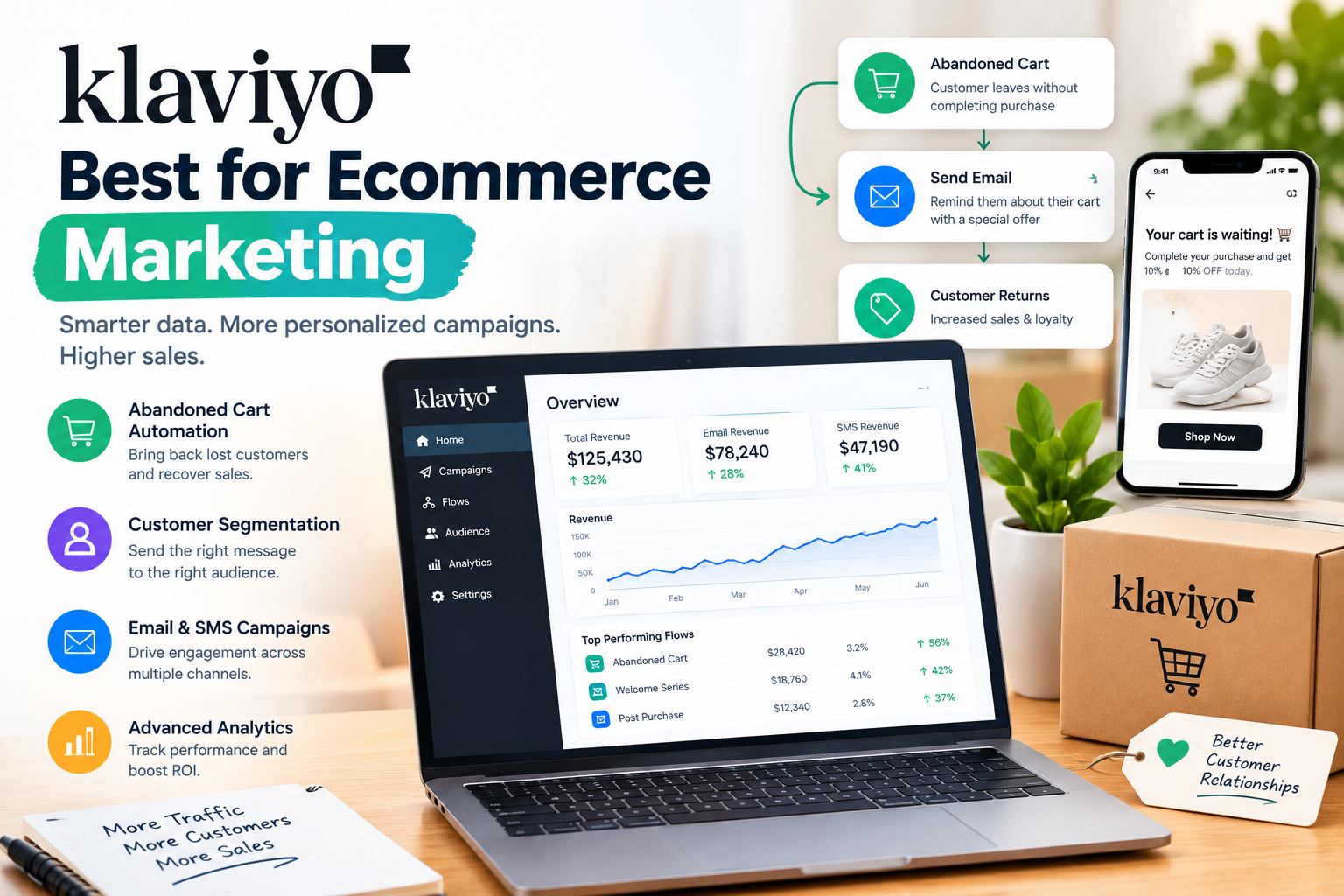
Klaviyo focuses on customer data and marketing automation for ecommerce brands. It is particularly relevant to online retailers that want to personalize campaigns using shopping behavior.
Key features:
- Abandoned-cart automation
- Purchase-based customer segmentation
- Email and SMS campaign capabilities
- Product recommendations and customer analytics
- Ecommerce platform integrations
Real-world example: A Shopify seller in California can send a cart reminder, recommend complementary products, and create a follow-up campaign for customers who purchased skincare products.
Best for: Online stores that want to improve repeat purchases and customer retention.
Main drawback: The platform may be more complex than necessary for businesses with simple email needs. Costs depend on audience size and selected services.
Explore Klaviyo’s official website for current product and pricing information.
5. Brevo — Best for Multichannel Marketing on a Budget
Brevo helps businesses coordinate email campaigns, customer communications, and selected automation workflows. Its available channels and features depend on the plan.
Key features:
- Email marketing and automation
- Contact management
- SMS and other communication options
- Campaign analytics
- Customer relationship tools
Real-world example: A local repair company in Ohio can send appointment reminders, follow up after completed jobs, and share seasonal service promotions with customers who have agreed to receive marketing messages.
Best for: Small businesses that need practical customer communication tools.
Main drawback: Advanced capabilities and sending limits vary by subscription. Check Brevo’s official website for current plan details.
Marketing Automation Platforms: Features Comparison Table
| Feature | HubSpot | ActiveCampaign | Mailchimp | Klaviyo | Brevo |
|---|---|---|---|---|---|
| Email marketing | Yes | Yes | Yes | Yes | Yes |
| Workflow automation | Advanced | Advanced | Available | Advanced ecommerce | Available |
| CRM capabilities | Strong | Available | Basic marketing focus | Ecommerce-focused | Available |
| Ecommerce marketing | Yes | Yes | Yes | Strong | Yes |
| SMS capabilities | Plan-dependent | Add-on options | Plan-dependent | Available | Available |
| Best use case | Sales and marketing | Customer journeys | Small businesses | Online stores | Multichannel communication |
.
Pros
- Save time: Automate repetitive emails and follow-ups.
- Improve consistency: Deliver messages according to customer actions.
- Support lead generation: Capture and nurture potential customers.
- Personalize campaigns: Use customer data to make communication more relevant.
- Measure results: Track campaign engagement and conversions.
- Scale marketing: Manage larger audiences without manually sending every message.
Cons
- Subscription costs: Advanced plans can be expensive for small teams.
- Learning curve: Complex workflows require setup and testing.
- Data quality issues: Incorrect contact information can reduce campaign effectiveness.
- Privacy responsibilities: Businesses must follow applicable privacy and messaging laws.
- Overcommunication: Poorly designed automation can annoy customers and increase unsubscribes.
Automation does not guarantee more sales. Results depend on useful content, accurate data, suitable timing, and a clear customer journey AI Software Subscriptions: Best Tools for 2026
Marketing Automation Platforms: Performance Comparison
The following ratings are qualitative editorial assessments, not laboratory benchmarks or verified customer satisfaction scores.
| Platform | Ease of use | Automation depth | Small-business fit | Ecommerce fit |
|---|---|---|---|---|
| HubSpot | High | High | High | High |
| ActiveCampaign | Medium | Very high | High | High |
| Mailchimp | High | Medium | Very high | High |
| Klaviyo | Medium | Very high | High | Very high |
| Brevo | High | Medium | Very high | High |
Businesses should evaluate these platforms using a trial or demonstration and their own campaign requirements. Important measurements include conversion rate, qualified leads, revenue per campaign, unsubscribe rate, and the time saved through automation.
Marketing Automation Platforms: Pricing Comparison
Pricing changes with contact counts, features, billing terms, and promotional offers. The table below gives a practical budgeting guide rather than a guaranteed quotation.
| Platform | Pricing approach | Budget consideration |
|---|---|---|
| HubSpot | Free tools and paid tiers | Advanced marketing features can require a substantial investment |
| ActiveCampaign | Tiered, customized by requirements | Contact count and selected features affect cost |
| Mailchimp | Free limited plan and paid tiers | Audience size and email limits affect pricing |
| Klaviyo | Usage-based plan structure | Contact profiles and email or SMS usage matter |
| Brevo | Free allowance and paid tiers | Sending volume and included features matter |
.
How to Choose the Right Marketing Automation Platform
The best platform is the one that matches your marketing strategy without adding unnecessary cost or complexity.
- For startups: Begin with a simple email automation tool that fits your current budget.
- For B2B companies: Prioritize lead scoring, CRM integration, and sales follow-up workflows.
- For ecommerce stores: Look for abandoned-cart messages, purchase tracking, and customer segmentation.
- For marketing agencies: Consider multiple-client management, reporting, permissions, and integrations.
- For growing businesses: Evaluate workflow flexibility, data controls, and the ability to scale.
Before committing, build one real workflow. For example, create a welcome email series for new subscribers and measure how many recipients click through to your website. This small test can reveal whether the platform is practical for your team.
Marketing Automation and Customer Privacy
US businesses should collect customer information responsibly and honor applicable consent and opt-out requirements. Email campaigns must comply with the CAN-SPAM Act, while automated text messages can involve additional rules under the Telephone Consumer Protection Act and other applicable laws.
Review the FTC’s CAN-SPAM compliance guide before launching promotional email campaigns. For text messaging, review applicable FCC rules and obtain appropriate consent before sending automated marketing messages.
FAQs About Marketing Automation Platforms
1. What are the best marketing automation platforms in 2026?
HubSpot, ActiveCampaign, Mailchimp, Klaviyo, and Brevo are options worth comparing. HubSpot suits connected sales and marketing, ActiveCampaign supports detailed customer journeys, Mailchimp is approachable for smaller businesses, Klaviyo focuses on ecommerce, and Brevo supports multichannel communication.
2. Which marketing automation platform is best for small businesses?
Mailchimp and Brevo are practical starting points for small businesses that need email campaigns and basic automation. The right choice depends on your contact list, monthly sending volume, required integrations, and budget.
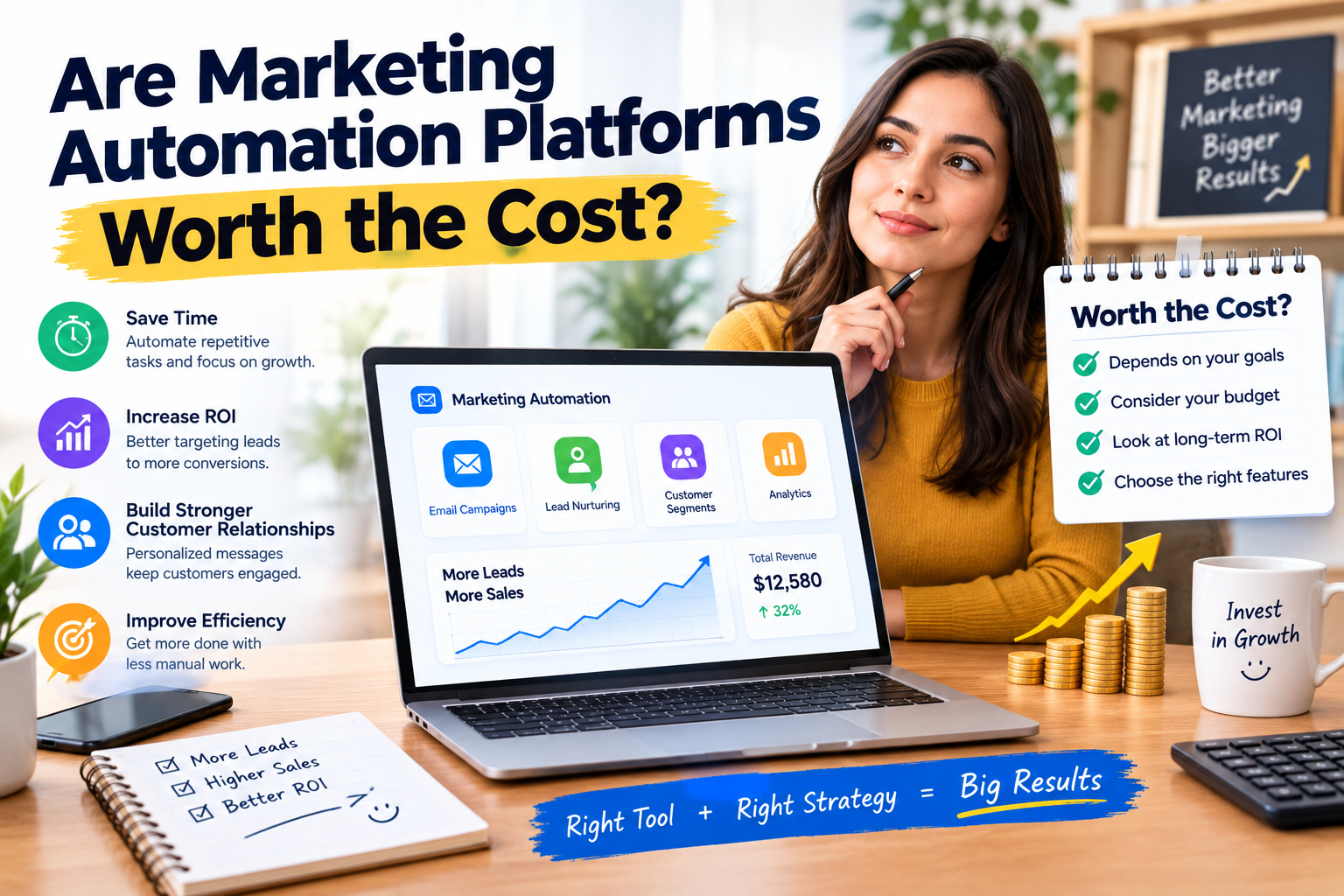
3. Are marketing automation platforms worth the cost?
They can be valuable when automation reduces manual work, improves follow-up, and generates measurable revenue. Track the cost of the subscription alongside conversions, saved staff hours, and customer retention before deciding whether to upgrade.
4. Can marketing automation platforms improve sales?
Yes, they can support sales by nurturing leads, sending timely follow-ups, and identifying interested prospects. Results are not guaranteed and depend on the quality of your offers, audience, and campaign strategy.
5. Do marketing automation platforms use AI?
Many modern platforms offer AI-assisted content creation, predictive insights, segmentation recommendations, or workflow assistance. Specific capabilities vary by vendor and subscription, so confirm that the features you need are included in your chosen plan.
Conclusion: Which Marketing Automation Platform Wins?
Marketing automation platforms help US businesses organize campaigns, nurture leads, and build more consistent customer relationships. The best choice depends on your goals rather than the number of features a product advertises.
HubSpot is the strongest all-in-one choice for businesses that want marketing and sales activities connected through a CRM. ActiveCampaign is a strong option for advanced automation, while Mailchimp is a practical starting point for small businesses. Klaviyo stands out for ecommerce brands, and Brevo deserves consideration for businesses that need multichannel communication on a budget Cursor 3 vs Windsurf AI IDE Comparison Battle 2026
Start with your most important marketing problem, compare the available plans, and test one workflow before investing in advanced features. A well-designed, simple automation can be more valuable than an expensive platform filled with tools your team never uses.